Familiars Expansion
Setup, Potency tracking, Familiar effects and solo play for the 2026 expansion.
Familiars adds pets to the 2026 edition of Trismegistus. Each player receives a Young Familiar after round 1 and an Adult Familiar after round 2. They begin Mischievous; paying their Metal cost turns them Benevolent until the next round’s Preparation.
Components and setup
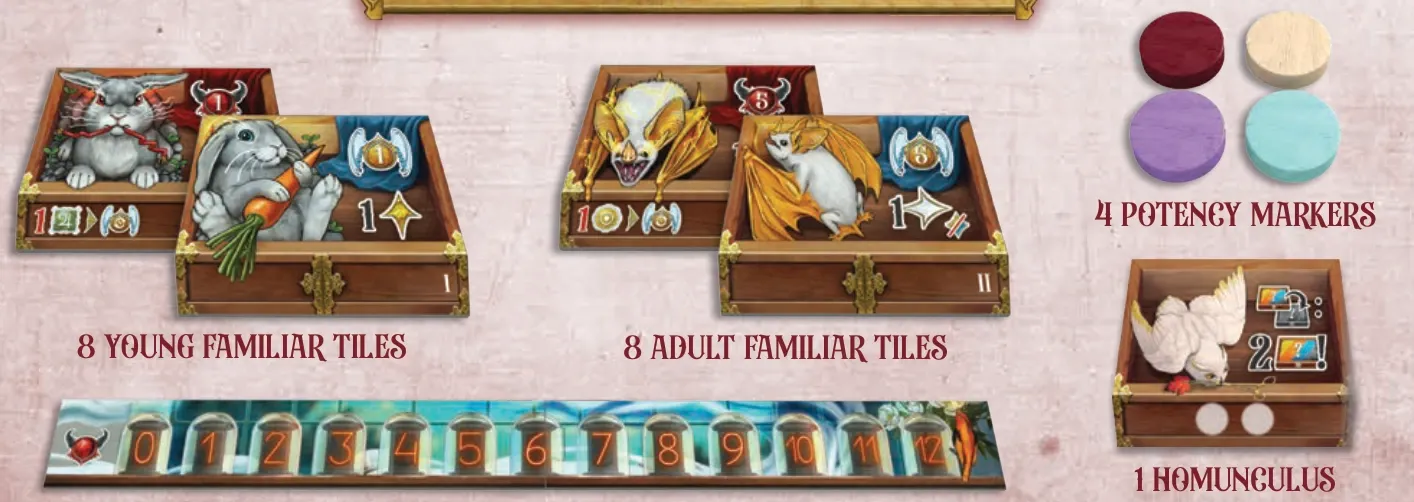
The expansion contains 8 Young Familiar tiles (I), 8 Adult Familiar tiles (II), one Potency sideboard, four Potency markers and one Homunculus Familiar tile.
Complete the base setup. Keep Young and Adult tiles in separate stacks beside the Experiment decks. Put the Potency sideboard beside the Main board, with each player’s marker on space 0. Choose Play with the Familiars expansion in Setup for the extra checklist.
Preparation and round resets
| When | Familiar display and reset |
|---|---|
| Round 1 Preparation | Shuffle the Young tiles and display one per player, Mischievous side up, beside the Potency sideboard. Return unused Young tiles to the box. |
| Round 2 Preparation | Shuffle the Adult tiles and display one per player, Mischievous side up. Return unused Adult tiles to the box. Flip every Benevolent Young Familiar in play back to Mischievous. |
| Round 3 Preparation | Flip every Benevolent Familiar in play back to Mischievous. No new Familiar display. |
Solo uses two tiles in each display, counting you and the Homunculus.
Track drafted Potency
During the Action phases of rounds 1 and 2, each time you draft a die, advance your sideboard marker by that die’s Potency. This records your total drafted Potency, separately from the Potency remaining on your active die.
After everyone has passed in round 1 or 2, assign the displayed Familiars before starting the next Preparation phase:
- Start with the player highest on the Potency track, then work downward. A tie favors the player earlier in turn order.
- Each player takes the tile with the highest remaining number. This is an assignment, not a free choice of animal.
- Place it Mischievous side up below the Transmutation section matching the color of which you have the most dice. If tied, choose between the tied colors.
- Put it below that section’s Artifacts. Familiars do not count toward the two-Artifact limit; two Familiars may occupy the same section.
- Once everyone has placed their tile, reset every Potency marker to 0.
Taming and Transmutations
During your turn, you may take a Free action to pay the Metal cost at the lower left of a Familiar and flip it Benevolent. You may tame only one Familiar per turn, following the once-per-type Free-action limit (publisher clarification). The winged symbol marks Benevolent; the horned symbol marks Mischievous.
A Familiar applies only in its own section. Resolve its effect for each individual Transmutation there, including bonus Transmutations. Negative effects must be paid each time; positive rewards may be declined. Mischievous effects add a cost, restriction or disadvantage. If you cannot pay an added cost or meet a restriction, that Transmutation is unavailable. Benevolent effects grant the benefit shown for that section.
For example, Young 6 requires an extra  while Mischievous. After paying its printed taming cost, its Benevolent effect allows an extra Transmutation along a path matching its section, with normal costs.
Publisher campaign illustration
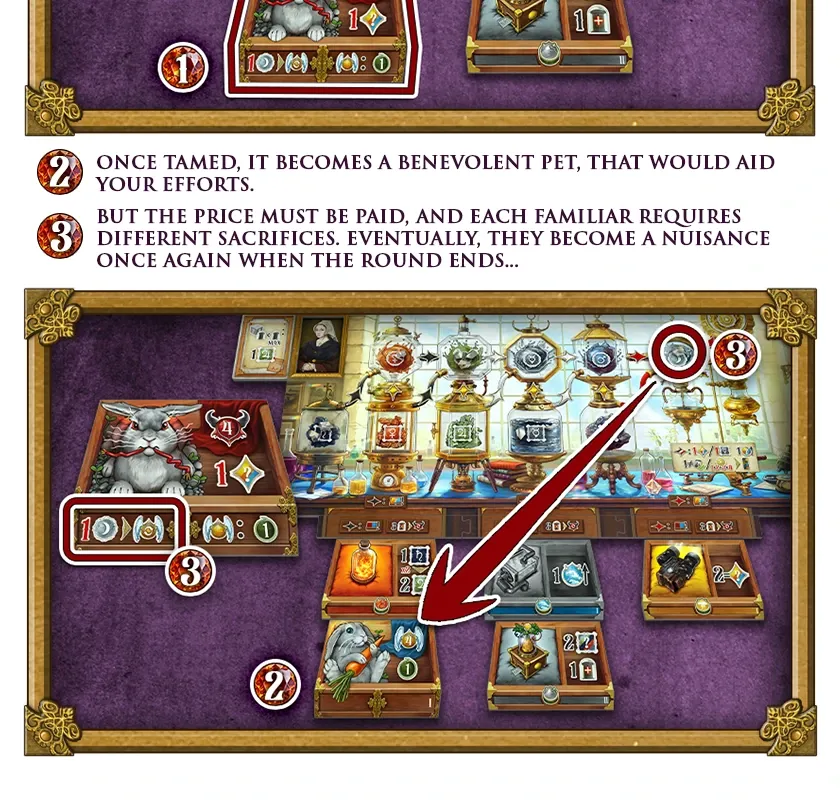
This Board&Dice Gamefound campaign graphic illustrates one Familiar becoming Benevolent; it is not a full face sheet. Benevolent-side art for all 16 Familiar tiles remains open, as does verification against a retail copy. Use the rulebook transcriptions below for exact effects.
Familiar reference
Use I or II plus the printed number to identify a tile. Each picture includes its taming cost at the lower left. The following effects apply when Transmuting in that Familiar’s section.
Young Familiars (I)
| Tile and taming cost | Mischievous | Benevolent |
|---|---|---|
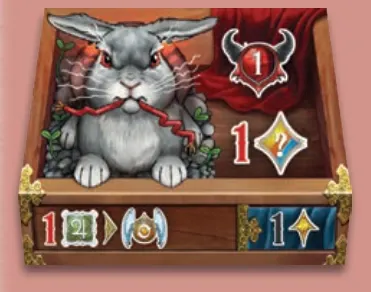 I-1 | Pay 1 additional  ; this extra payment gives no Mastery advancement. |  Refine any one Metal. |
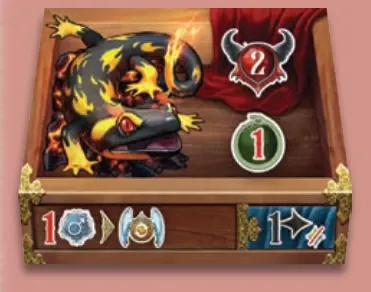 I-2 | Lose 1  , minimum 0. | You may make one Transmutation along a black path. You may omit its Essence or Mercury payment; if you do, gain no Mastery advancement. |
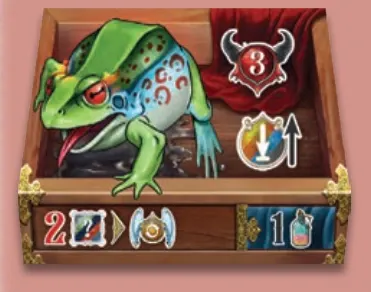 I-3 | Advance your lowest Mastery track instead of the track matching the Essence or Mercury spent. | Gain 1 . |
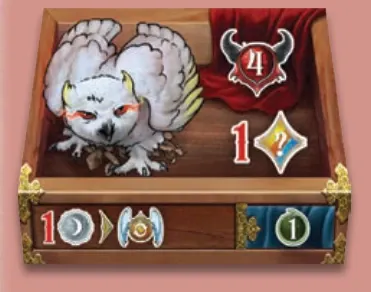 I-4 | Pay 1 additional ; this extra payment gives no Mastery advancement. | Gain 1 . |
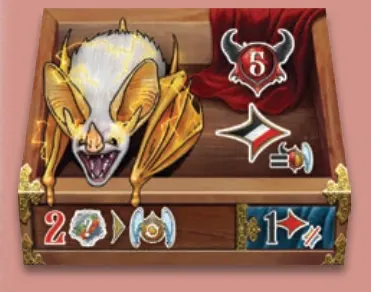 I-5 | An any-path Transmutation effect may use only paths matching this section’s color. | You may make one Transmutation along a red path. You may omit its Essence or Mercury payment; if you do, gain no Mastery advancement. |
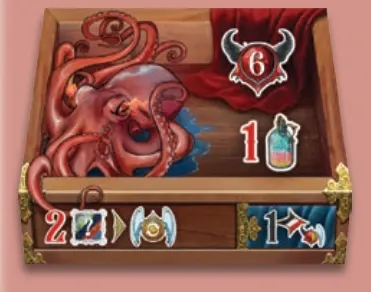 I-6 | Pay 1 . | You may make one extra Transmutation along a path matching this section’s color, following the normal rules. |
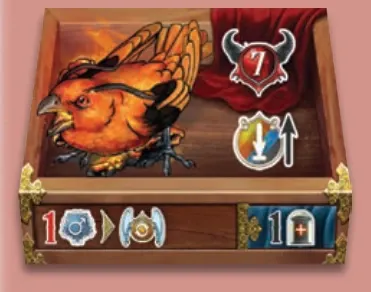 I-7 | Advance your lowest Mastery track instead of the track matching the Essence or Mercury spent. | Gain 1  . |
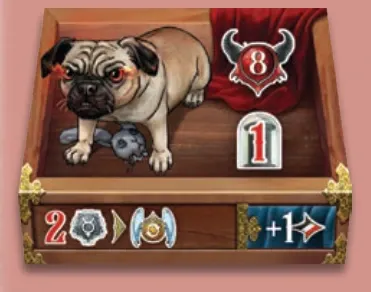 I-8 | Pay 1 additional  ; each Transmutation in this section effectively costs 2 Potency. | You may move the Metal just Transmuted along the next path, even into another section. Pay its Essence or Mercury normally. |
Adult Familiars (II)
| Tile and taming cost | Mischievous | Benevolent |
|---|---|---|
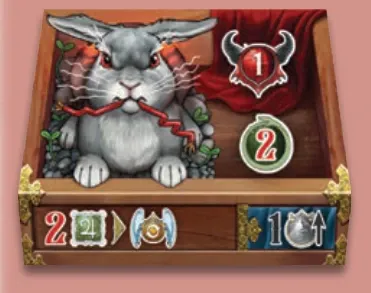 II-1 | Lose 2 , minimum 0. | Advance your  Mastery track. |
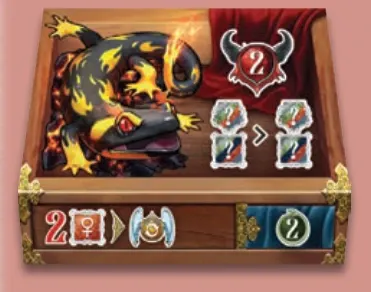 II-2 | Transmute only if you have more of the starting Metal type than the destination type, counting both refined and unrefined Metals. | Gain 2 . |
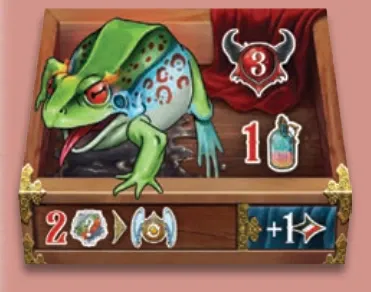 II-3 | Pay 1 . | You may move the Metal just Transmuted along the next path, even into another section. Pay its Essence or Mercury normally. |
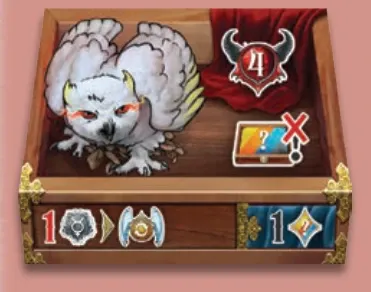 II-4 | You cannot use any  in this section. | Gain any 1 . |
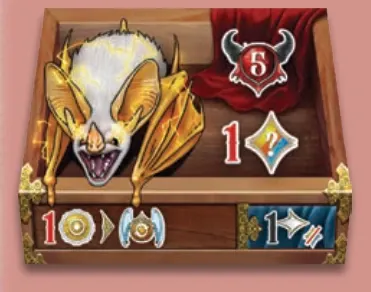 II-5 | Pay 1 additional ; this extra payment gives no Mastery advancement. | You may make one Transmutation along a white path. You may omit its Essence or Mercury payment; if you do, gain no Mastery advancement. |
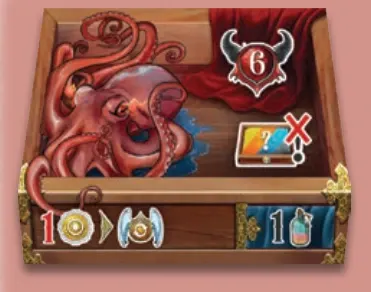 II-6 | You cannot use any in this section. | Gain 1 . |
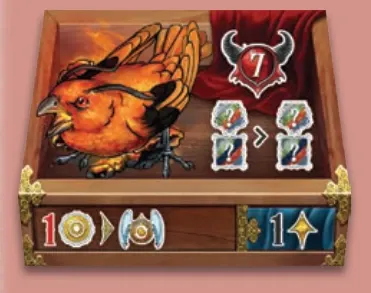 II-7 | Transmute only if you have more of the starting Metal type than the destination type, counting both refined and unrefined Metals. | Refine any one Metal. |
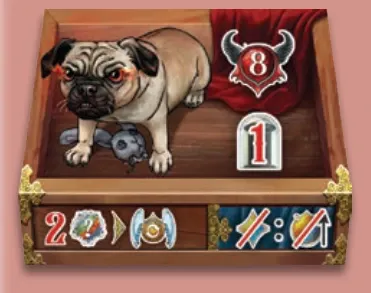 II-8 | Pay 1 additional ; each Transmutation in this section effectively costs 2 Potency. | You may omit the Essence or Mercury payment, gaining no Mastery advancement. You may instead pay normally and advance the matching Mastery track. |
For II-2 and II-7, the rulebook’s example allows Tin → Mercury with 2 unrefined Tin, 1 refined Tin and 2 Mercury: three Tin is more than two Mercury.
Solo Familiars
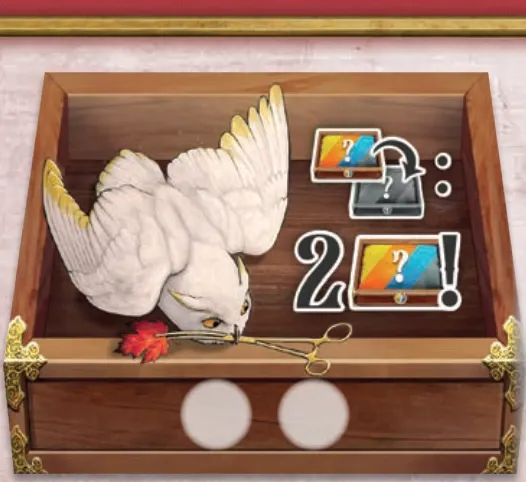
Follow the normal expansion setup and place the Homunculus Potency marker on 0. Put its Familiar tile face down beside its Player board. Display two Young tiles in round 1 and two Adult tiles in round 2, and track drafted Potency for both players.
At the end of rounds 1 and 2:
- If the Homunculus is highest on the Potency track, discard the higher-numbered Familiar and add 1 Element marker to its Familiar tile.
- If it is not highest, discard the lower-numbered Familiar and add 2 Element markers to its Familiar tile.
- Turn its Familiar tile face up if needed. You receive the remaining displayed Familiar using the usual placement rules. Apply the normal turn-order tiebreak and Potency reset.
During the Action phase, when a Decision card requires the Homunculus to exhaust an Artifact and its Familiar tile has an Element marker, remove one marker and double that Decision card’s effect. When no markers remain, turn the tile face down.
Example: an Artifact exhaustion granting one Fire advancement and 2 VP instead grants two Fire advancements and 4 VP. Still exhaust only one Artifact.
Rules and illustrations: Board&Dice English Familiars rulebook, pp. 2–10, ©2026 Board&Dice.